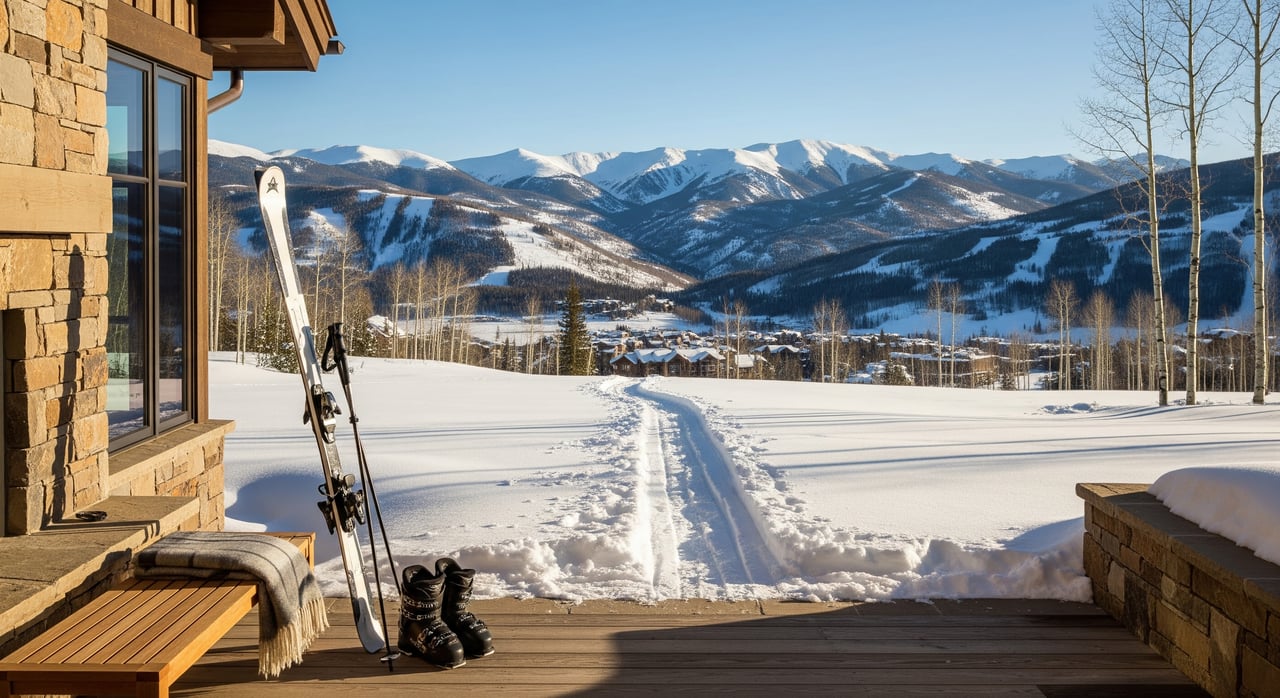
You see “ski-in/ski-out” in a Breckenridge listing and picture clicking into your bindings at the door. Sometimes that vision is real. Sometimes it means stairs, a plaza, or a shuttle before you reach a lift. If you want true slope convenience, it pays to dig deeper. In this guide, you’ll learn what ski-in/ski-out really means in Breckenridge, how to verify every claim, and a simple checklist you can use on any condo or townhome. Let’s dive in.
What ski-in/ski-out means here
True ski-in/ski-out (direct)
A true ski-in/ski-out property lets you clip in and slide directly onto a maintained, in-bounds run without crossing roads or carrying your gear. You can also ski back to the property without long walks or unstrapping. This is the strict definition buyers value most.
Lift-adjacent access
Lift-adjacent means a short walk to a lift or terminal. You might cross a pedestrian plaza, walk a few minutes, or take stairs. You often ski out to the lift, but you may not ski directly back to your door.
Short walk or stair access
Some listings say “ski access” or “ski-in” when you can finish skiing near the building, then walk a short distance, shuffle your skis, or cross a service road. It can be convenient, but it is not the same as a direct glide to your door.
Shuttle or resort-adjacent
These homes or condos are close to the base area and rely on resort shuttles, free town buses, or a short drive. Helpful, but not ski-in/ski-out in the strict sense.
Near-mountain or slope views
You may overlook the runs without any skier access. Treat these as location perks, not access claims.
Why Breckenridge access varies
Resort layout by peaks
Breckenridge spans several peaks along a ridgeline. Peak 8 and Peak 7 base areas cluster lodging and slope access, so they are more likely to offer direct options. Historic downtown and higher-elevation neighborhoods can feel close to the mountain yet have very different access patterns.
Gondola links town and base
Breckenridge connects the town core to the ski area base with a public gondola. Being a short gondola ride from a lift is useful and often fast, but it is not the same as stepping into your skis at the door.
Operations and seasons
Early or late season snow can lower coverage and break ski-in/out routes. Access depends on mountain operations: grooming decisions, which runs are in-bounds, and temporary lift closures. A route that works mid-season might not be reliable on opening week or in spring.
Altitude and effort
Breckenridge sits around 9,600 feet. Short walks can feel longer at altitude, especially in ski boots and winter conditions. A “five-minute walk” can be more demanding than you expect.
How to decode marketing claims
- “Ski-in/ski-out.” Could mean direct slope access or a walk to a plaza. Ask for the exact route.
- “Steps to the lift” or “steps to the gondola.” Expect stairs or a short paved walk. Not necessarily a skiable return.
- “Slope-side” or “slope views.” Visual proximity without guaranteed access.
- “Walk to lift” or “minutes to lift.” Confirm whether that includes stairs, elevation changes, or icy surfaces.
- “Ski easement.” A recorded easement is strong evidence of access, but you should still review the documents and any restrictions.
Red flags include vague wording without named runs, photos that show road crossings or long staircases, and no mention of easements where private land is clearly involved.
Verification steps that protect you
- Do an on-site walkthrough in winter. Test the route at typical arrival and departure times. Photos or a short video help.
- Ask for named routes. Which run, cat track, or service trail provides access? Confirm whether it is maintained and open during the season.
- Request recorded documents. Review plat maps, easements, and HOA declarations. If someone claims a “ski easement,” ask for the recorded document.
- Time the walk. In minutes, at a relaxed pace, note stairs, elevation change, and any road or driveway crossings.
- Check for obstacles. Doors to unlock, gates, retail plazas, bike racks, and rules about carrying skis through lobbies can add friction.
- Confirm winter maintenance. Ask who clears snow on paths from the door to the run or lift. Identify who maintains any private access trails.
- Speak with mountain operations. Ask whether the specific run is kept open and groomed and whether skier access to that location is permitted.
Practical everyday factors
Daily routine and storage
- Can you wear boots to and from the slope, or do building rules require you to remove them?
- Are there secure ski lockers and boot dryers? Small condos without storage make daily ski life harder.
- How easy is loading and parking? Some buildings limit garage access or loading times during peak hours.
Seasonality and reliability
- Early and late season can interrupt otherwise solid routes.
- Private trails are only as reliable as the group that maintains them, whether the resort, an HOA, or a private owner.
Legal and title checks
- Recorded access rights matter. If access depends on informal arrangements, it can be fragile.
- HOA rules can affect exterior entries, storage, and guest access. Review these for any limits on ski use.
- Insurance and safety considerations may arise with snow loads, skier traffic, and resort operations near buildings.
Resale and value
- Buyers pay premiums for simple, proven slope access. The difference between a true doorstep glide and a two-minute walk shows up in pricing and rental demand.
- Clear documentation of access and easements helps with appraisals, buyer confidence, and eventual resale.
Health and safety
- At about 9,600 feet, stairs and gear carrying can be more taxing. Plan routes that minimize effort and reduce risk on icy surfaces.
- Road or service-road crossings can be slick and busy. Evaluate lighting and surface conditions, especially after dark.
Breckenridge buyer checklist
Use this quick checklist when you evaluate a listing:
- Exact listing claim copied verbatim.
- Named run or trail used for access, plus resort confirmation of maintenance.
- Nearest lift or gondola named, with measured walking time in winter conditions.
- Stairs, elevation change, and any road or driveway crossings noted, plus who maintains them.
- Return-to-property method: direct ski return, short walk, or remove skis.
- Recorded easement or right-of-way present in title or HOA docs. Request copies.
- HOA rules about boots, skis, entrances, and storage.
- Onsite ski lockers and boot-drying options confirmed.
- Winter maintenance responsibilities identified for doors, paths, and access trails.
- Whether guests are expected to use public gondola or transit to reach lifts.
- Whether access depends on resort operations or private maintenance.
- Any known access or safety issues reported by owners or the resort.
- County maps and recorded documents checked for property lines and easements.
- On-snow walkthrough scheduled to simulate typical arrival and departure.
Smart questions to ask
- “Please provide the recorded plat or easement that establishes ski access.”
- “Which named run or service trail is used, and is it routinely open and groomed?”
- “Are there any access restrictions such as hours, locked gates, or staff-only doors?”
- “Who clears snow from the path between the unit and the run or lift?”
- “Have there been safety closures or incidents that affected access to this location?”
Next step: see it on snow
A winter, on-mountain showing is the best way to confirm real access. You can test the morning route to the lift, ski the return, and time the walk in boots. Bring your checklist, review easements and HOA rules, and ask mountain operations about grooming patterns. A little homework now saves frustration later and helps you pay only for the convenience you will actually use.
Ready to tour properties and verify access in real conditions? Schedule a guided, in-season walkthrough with Stuart Reddell to see exactly how each route works.
FAQs
Is ski-in/ski-out defined by law in Breckenridge?
- No. It is a marketing term. Legal protection comes from recorded easements, plat maps, HOA declarations, and title language.
Can snowpack make a ski-in/ski-out home unusable?
- Yes. Low early or late season snow, grooming changes, or temporary closures can interrupt access even when a route exists.
How much premium should I expect to pay for slope access?
- It varies by convenience. Doorstep access commands more than a multi-minute walk. Confirm local comparables with an agent.
Should I insist on an on-snow demonstration before buying?
- Yes. An in-season showing during typical arrival and departure times is the best way to validate every claim.
What documents prove that I can cross to a run?
- Recorded easements, plat maps, HOA declarations, and title work provide the strongest evidence of access rights.