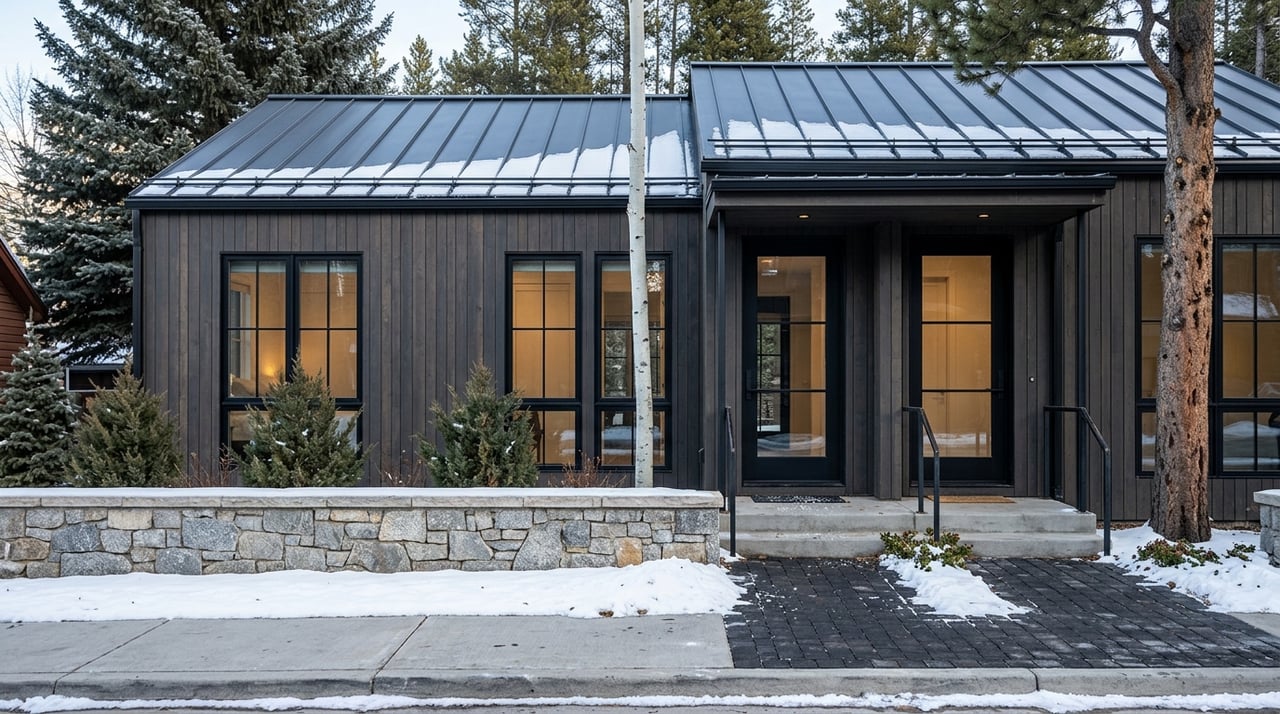
If you want a home near Main Street in Breckenridge, you are not just buying square footage. You are competing for one of the town’s most limited and convenient locations. That can feel daunting, especially when the right property draws fast attention, but a smart plan can give you a real edge. In this guide, you’ll learn why in-town homes are so hard to win, what the current market is telling you, and how to compete with more confidence. Let’s dive in.
Why In-Town Breckenridge Homes Are So Competitive
In-town Breckenridge homes stand out because they combine walkability, ski access, and historic character in one place. The Town of Breckenridge describes Main Street as the commercial heart of town, and the downtown core sits within the protected Historic District. That protection helps preserve Breckenridge’s look and feel, but it also limits how easily new housing can be added close to the core.
According to the town’s planning documents, much of the Historic District is capped at 9 units per acre. That lower-density framework helps explain why the supply of homes near Main Street stays tight, even when buyer demand is steady. In other words, there are only so many close-in properties to go around.
Location scarcity matters even more here because convenience is built into the address. Breckenridge Resort notes that Peak 9 is the closest base area to downtown, the BreckConnect Gondola links town to Peaks 7 and 8, and Breckenridge offers free in-town transportation and ski-to-town access. For many buyers, that mix of downtown access and mountain access is exactly the point.
What the Market Says Right Now
Today’s market does not mean every listing becomes a bidding war, but it does reward buyers who are prepared. Redfin’s Breckenridge market data for February 2026 describes the market as somewhat competitive, with a median sale price of $1.275 million, a 98.1% sale-to-list ratio, and 6.7% of homes selling above list price. It also notes that some homes receive multiple offers and hot homes can go pending in around 8 days.
Broader Summit County market data from ShowingTime and the Colorado Association of Realtors points to a market that is still fairly balanced but not loose, with 4.1 months of supply and 95.2% of list price received in February 2026. That means buyers may have time to evaluate some properties, but the best in-town options can still move quickly.
There is another factor many buyers do not see at first. A meaningful share of local housing is not fully open-market inventory. The town’s housing resources state that more than 1,136 deed-restricted homes have been created through partnerships, with another 256 individual deed-restricted units reported at year-end 2023 on the Breckenridge housing neighborhood page. That narrows the pool of homes available for second-home buyers and investors.
Start With Financing Readiness
If you are serious about buying in town, financing prep should happen before the right listing appears. The Consumer Financial Protection Bureau says a preapproval letter shows a lender is tentatively willing to lend you a set amount, and sellers frequently require one before accepting an offer. The CFPB also notes that preapprovals often expire in 30 to 60 days.
That matters in Breckenridge because timing can be tight. If a strong in-town property goes pending in about 8 days, you do not want to start gathering tax returns, verifying assets, or finding a lender after you fall in love with a home. You want to be ready to act while others are still getting organized.
A strong preapproval does more than check a box. It helps you define your real budget, narrow your search, and make decisions quickly when a match appears. In a market like this, clarity is a competitive advantage.
Stay Flexible on Property Type
One of the best ways to improve your odds is to stay open to more than one property type. Breckenridge’s planning framework places higher-density residential uses closer to the core, while some lower-density neighborhoods are farther out. That means buyers focused only on a detached house within a very tight walk zone may have fewer options than buyers willing to consider a condo or townhome.
For many buyers, that flexibility is practical rather than a compromise. If your top priorities are being near Main Street, having easier access to the gondola, or reducing car dependence, a condo or townhome may deliver those benefits more directly than a detached home farther from the center.
This is especially true if you are balancing lifestyle goals with budget. Expanding your search slightly can give you more choices, a better chance of finding parking that works for your day-to-day life, and less pressure to chase a very small slice of inventory.
Understand the Tradeoffs of Close-In Living
The most convenient Breckenridge locations often come with real tradeoffs. In the historic core, the town says changes to existing buildings and new construction are reviewed under historic design standards. The comprehensive planning documents also note that structures in the Historic District rarely exceed two stories.
That can affect what you buy and what you can change later. An older home near Main Street may offer an outstanding location, but it may also come with tighter lots, a smaller footprint, or more limits on exterior updates than you would find elsewhere. If location is your top priority, it helps to expect those tradeoffs from the start.
Parking is another issue worth taking seriously. The town’s planning documents state that many core residences do not have off-street parking, many historic-district streets do not allow parking in the right-of-way, and front-yard parking is discouraged. In-town convenience is valuable partly because it is scarce, and parking is part of that equation.
Check Rental Rules Before You Offer
If you are hoping to use an in-town property as a short-term rental, do your homework before you write an offer. The Town of Breckenridge short-term rental page requires a valid STR license for any property rented for fewer than 30 consecutive days. It also says HOA rules may impose additional restrictions, and STR licenses do not transfer when a property sells.
The same town page shows that license availability depends on zone, with some areas having availability and others operating with no availability or waitlists. That means you cannot assume a property can be used the way the prior owner used it, or the way you hope to use it, simply because of the address.
Deed restrictions matter too. The town’s housing program explains that some deed-restricted homes cannot be used as seasonal homes, vacation homes, or short-term rentals, and those restrictions remain with the property. If rental flexibility matters to you, a two-step review is essential: confirm the town’s STR zone and license status, then confirm HOA rules and any deed restrictions.
Build a Stronger Offer Strategy
In this market, the best strategy is usually not just offering more money. It is presenting yourself as a buyer who is ready, realistic, and easy to work with. Sellers want confidence that the deal can close.
Here are the basics that can help you compete for an in-town Breckenridge home:
- Get fully preapproved before touring seriously.
- Know your true budget, including reserves and monthly carrying costs.
- Be ready to respond quickly when the right listing appears.
- Stay flexible on property type and exact location.
- Review parking, historic-district factors, and intended-use limits early.
- Confirm short-term rental rules before assuming income potential.
That kind of preparation helps you move fast without skipping due diligence. It also keeps emotion from driving decisions in a market where location can make almost any well-positioned property feel urgent.
Why Local Guidance Matters
Buying in-town Breckenridge is not only about watching listings. It is about understanding how local planning rules, parking realities, deed restrictions, and rental regulations affect value and fit. Two homes with similar prices can offer very different day-to-day experiences depending on block, access, parking, and use limitations.
That is where local context can make a major difference. When you understand the tradeoffs before you write, you can compete more confidently and avoid surprises after closing. In a market with limited close-in inventory, that kind of clarity matters.
If you are preparing to buy near Main Street, the gondola, or one of Breckenridge’s base areas, working with a local advisor can help you focus on the right opportunities and act quickly when they appear. If you want a tailored plan for your search, Stuart Reddell can help you navigate Breckenridge with clear guidance and a high-touch approach.
FAQs
Do I need a preapproval letter to buy an in-town Breckenridge home?
- Yes. The CFPB says sellers frequently require a preapproval letter, and it helps show that financing is likely to be available.
Can I use an in-town Breckenridge property as a short-term rental?
- Maybe, but only if the property’s town STR zone, license status, HOA rules, and any deed restrictions allow it.
Are parking limitations common for homes near Main Street in Breckenridge?
- Yes. Town planning documents say many core residences lack off-street parking, and some historic-district streets do not allow parking in the right-of-way.
Is a condo or townhome a smart option for close-in Breckenridge living?
- Often yes. Higher-density housing is concentrated closer to the core, so condos and townhomes may offer better access to Main Street, transit, and ski connections.
Do historic-district rules affect remodeling in Breckenridge?
- Yes. The town says work in the Historic and Conservation Districts is reviewed under design standards, so exterior changes may be more limited than in other areas.